Separate a habit you do not have from an action you have not completed
English not can correspond to different Mandarin patterns. Practise one useful distinction through a fictional reading task: not reading a type of book as a general habit and not having read a particular book yet. Context should guide the negation you choose.
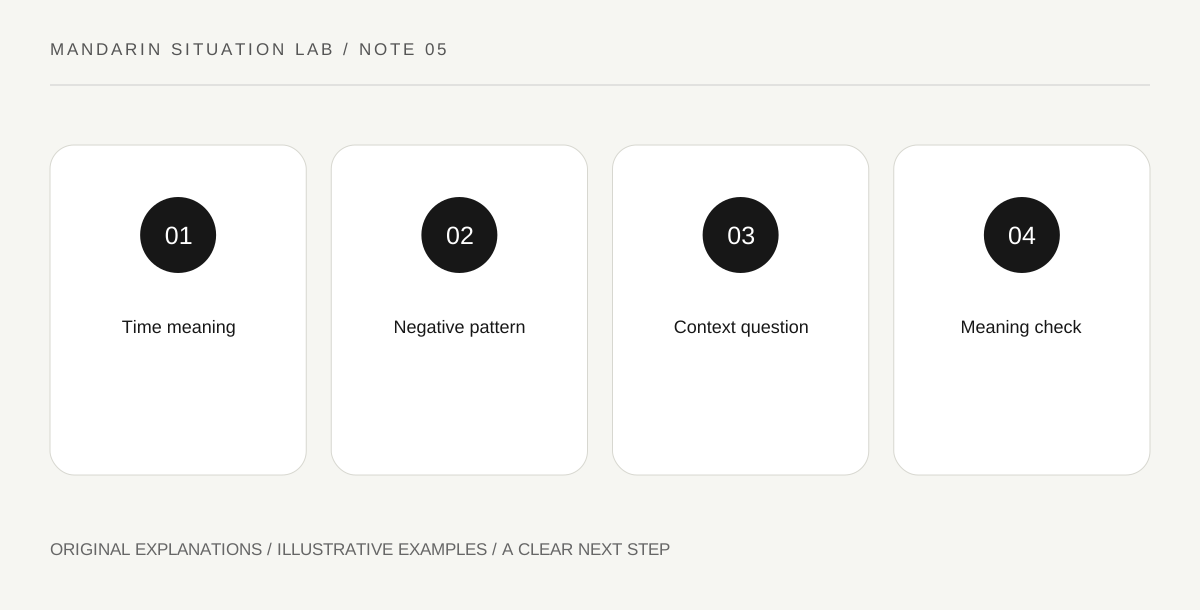
Original explanatory diagram. Read the full method and limitations below.
Give the statement a clear time meaning
我不看恐怖小说。Wǒ bú kàn kǒngbù xiǎoshuō. I do not read horror novels. In this exercise, the sentence describes a general preference or habit. Draw several possible days on a calendar rather than a single completed event. You are not reporting whether one specific book was finished yesterday. This context matters more than matching the English word not to one Mandarin character automatically.
Describe an uncompleted event
我还没看这本书。Wǒ hái méi kàn zhè běn shū. I have not read this book yet. The word 还 adds the sense of still or yet in this sentence. Point to one specific book card and leave its reading box unchecked. The example does not claim that 没 always means the past; it presents the absence of the relevant event by now. Keep the learning claim as narrow as the sentence.
Ask two different questions
你看恐怖小说吗?asks whether the person reads horror novels. 你看这本书了吗?asks about the particular reading event in this context. Have a partner choose which question to ask, then answer according to a fictional character card. One character may generally enjoy the genre while not yet having read this book. That combination helps prevent the mistaken assumption that a negative answer must describe a permanent dislike.
Keep the correction attached to meaning
If you choose the wrong negative pattern, explain the intended meaning first: I mean I have not read this one yet. Then rebuild the Mandarin sentence. This is more useful than merely replacing 不 with 没 while leaving a confused story underneath. Finish by giving the partner two English summaries to choose from: a general habit or an unfinished reading task. Their choice shows whether the sentence conveyed the intended distinction. Correct the intended story first, then the form of the negative sentence.
Illustrative worked example
Illustrative task: A fictional reader enjoys adventure stories but never chooses horror novels. Another reader enjoys horror novels but has not read the book on the table. The first learner says 我不看恐怖小说. The second says 我还没看这本书. They swap character cards and answer a different question without copying the previous response. Each partner explains whether the answer concerned a general habit or one reading event.
Questions that come up
Is 不 for the present and 没 for the past?
That shortcut is too broad. Intention, habits, event occurrence and the verb involved all matter. Use this narrow contrast first and study other contexts separately.
Can I say 没有 instead of 没 here?
没有 is also used in negation patterns. This exercise uses the common short 没 before the reading action; keep a reliable model for each new construction.
References and scope
These sources support the factual background. Examples and exercises are original illustrative teaching material. References do not imply endorsement.
- Mango Languages: How to say no and not: bu or mei — Common negation distinctions.
- Mango Languages: Aspectual particles le and guo — Completed actions and previous experience.